




Sensory design in specialist vehicles
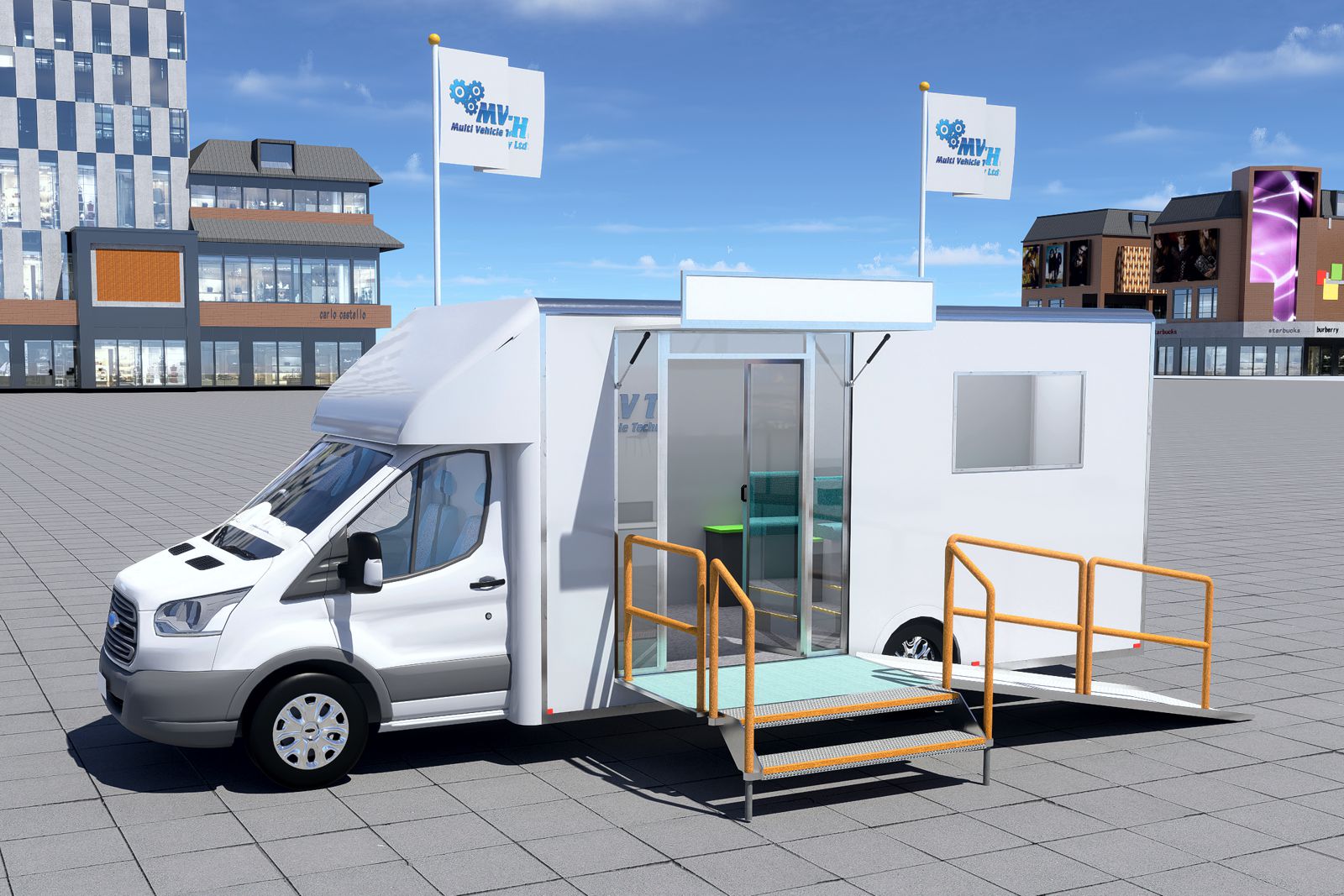
 Sensory design is about more than just a vehicles external and internal appearance. The appropriate use of textures, colours, sounds and even smell will significantly increase accessibility to a broader range of visitors simultaneously improving their experience once on board.
Adopting a sensory design approach applies to a range of our specialist vehicles and particularly so to our mobile libraries, exhibition vehicles, youth buses, play buses and adult outreach vehicles.
When we talk about accessibility everyone will naturally think of wheelchair users for whom providing access comes down to a choice between a ramp or a specialist vehicle lift. Neither is better than the other and selection merely depends upon practicality for the vehicle in question and where and how it is to operate.
According to NHS figures from 2023 there are 665,000 registered wheelchair users in the UK out of a total population of 68.3 million (Office of National Statistics) representing less than 1 percent of the population. I suspect that if it were not for legislation there would be little appetite to invest so heavily on such features for so small a percentage of prospective visitors, so in my mind this is where legislation really fulfils a need and does a great job.
However, the downside of being so successful in promoting the needs of wheelchair users allowing many to this “box” and think their job is done when there are many more groups in need of “accessibility. This is the point where sensory design needs to step in and take over.
Sensory design essential for sight loss or impairment
In my view a number of disabilities are being ignored when it comes to specialised vehicle design.
For example, a greater percentage of the population than those using wheelchairs have issues with their eyesight. According to the RNIB Insight Snapshots there are two million people with sight loss severe enough to impact daily life. So why I ask do so few design teams consider the needs of such a disability when designing to make life easier for those with impaired sight is quite easy, will enhance the design of a vehicle at minimal extra expense.
At MVTech we always bring this to the attention of our clients and offer advice on design details. For example, we recommend that for public access stair handrails should ideally be coloured yellow or another bright contrasting colour and that edges of the steps be fitted with yellow/black strips. We also encourage a sensory design approach for any worktops and counters where distinct colours and textured material should be used to highlight edges and corners.
Careful though also needs to be given to choice of lighting in public and private rooms within the trailer of vehicle plus colours and style of any texts included in graphics displays.
Sensory design for the deaf
Another impairment often overlooked when it comes to exhibition and outreach activities is deafness. The RNID (Royal National Institute for the Deaf) say that 1 in 3 adults in the UK are either deaf, have a hearing loss or suffer from tinnitus. They estimate that 1.2 million have hearing loss severe enough that they are unable to hear most conversational speech!
To ensure our mobile libraries, outreach vehicles, youth buses and even our exhibition trailers are accessible for those with hearing loss we recommend a number of sensory design features which can include having carpet tiles rather than vinyl floor coverings, using soft furnishings as opposed to plastic or wooden seating, installing acoustic panels to ceilings and walls, baffled display panels and good easily read signage.
We automatically recommend the installation of a hearing loop which is an assistive listening system that helps make public premises welcoming to people with hearing loss and are available from companies such as Contacta Systems Ltd and Ampetronic Ltd to name but two of many systems suppliers. These transmit audio directly to users’ hearing aids or cochlear implants, cutting out background noise, and making speech and music clear and for exhibition use there are systems that can function in open spaces. Installing a hearing loop will ensure specialist vehicle operators are compliant with equality legislation.
Sensory design for Dyslexia
To quote the actor Michael Caine “Not a lot of people know this” but Dyslexia is a disability and is recognized as a specific learning disability in legal frameworks including the Equality Act 2010. In short, we need to ensure that specialised vehicle design features are dyslexia friendly, and to do so, is quite simple but often overlooked.
Primarily the design features centre around signage, displays and information panels where typeface and colours will be effective for those suffering from Dyslexia. That said there can be a bit of a conflict between the needs here and those suffering from sight loss, as this group need brighter contrasting colours.
Smell can have a profound sensory impact
I am not suggesting that our clients should be installing diffusers into their vehicles but just like having background music to create an ambient atmosphere it is possible to exploit the sense of smell to create an impact on immediate feelings, appetite and more. For example, a company promoting smoke alarms could do well to generate the smell of smoke to attract attention and demonstrate the power of their products.
Similarly, when designing our product sampling vehicles and catering vans, we seek to encourage our clients to consider devises to generate the smell of cooked foods to increase footfall and enhance customer experience. In these instances, we often replace the terminology “sensory” with the expression “experiential experience”….but that’s marketing people for you!
Summarising the value of sensory design in specialist vehicles
Statistically speaking visitors to roadshow vehicles and mobile public services are more likely to have sight loss, hearing impairment or dyslexia than be a wheelchair user and whilst I would never advise against the need for wheelchair accessibility, I would encourage all those commissioning specialised vehicles to give serious consideration often-overlooked impairments. When designing a specialised vehicle thought should be given to vision, touch, sound, and smell to promote inclusivity and influence behaviour be you involved in promotional activities, sales, catering or even healthcare.
Multi Vehicle Technology is unique in providing sensory design advice
At Multi Vehicle Technology we are experienced in the design and manufacture of bespoke incident response vehicles including mobile command units for Search and Rescue Organisations and Fire and Rescue Services which may not require too much attention being paid to sensory design (apart from perhaps lighting) whilst on the other hand our Exhibition vehicles, Display, Product Demonstration vehicles and play buses benefit greatly from it.
If you have a project that could benefit from our sensory design input please give us a call on 0116 326 0989 or write to us at sales@multivehicletechnology.co.uk. Alternatively, we are more than happy to arrange a Teams meeting. From there we will be extremely happy to offer our advice and if the project is in either an advanced stage or you are seeking funding, we can provide supportive 3d drawings and budget parameters to assist with your presentations.
